

About the conference
This year, Latvijas Banka’s economic conference will focus on the key economic challenges the euro area is facing in the new geo-economic environment.
Given the high degree of integration across European economies, these challenges have significant implications for the outlook of smaller Member States, including Latvia.
Particular emphasis will be placed on the policy actions needed to address these issues and their potential translation into tangible improvements in the daily lives of European citizens and businesses.
Program
Registration
9:00
Welcome coffee
OPENING
10:00
TBC
Opening remarks
10:05

Mārtiņš Kazāks
Governor of Latvijas Banka
Keynote
10:15
Economic Challenges in Germany and the Future of Europe
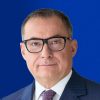
Joachim Nagel
President of the Deutsche Bundesbank
The keynote speech will examine the most pressing challenges facing the German economy and their broader implications for the euro area. These include persistently weak productivity growth, rising risks of de-industrialisation, weakening business dynamism, and the economic impact of increased fiscal spending on defence and public infrastructure.
Panel discussion
10:45
A fit Germany in a strong Europe: Common challenges, shared solutions
The ensuing panel discussion will broaden the debate to cover the key economic challenges in the euro area, with a strong emphasis on policy responses and practical solutions. It will also connect the experiences of the euro area’s largest economies with the challenges and opportunities in the smaller euro area economies, such as Latvia.
SPEAKERS
Joachim Nagel
President of the Deutsche Bundesbank

Jeromin Zettelmeyer
Director of Bruegel
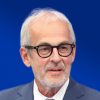
Roberts Zīle
Vice President of the European Parliament
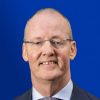
Klaas Knot
Member of the Systemic Risk Council CFA Institute, Distinguished Visiting Fellow Peterson Institute for International Economics
MODERATOR

Andris Strazds
Deputy Governor of Latvijas Banka
Coffee break
12:00
Keynote
12:30
Maria Luís Albuquerque
EU Commissioner for Financial Services and the Savings and Investments Union
The keynote will elaborate on the role of the financial sector in supporting the economic and structural adjustments needed to address the challenges highlighted in the first panel discussion, with particular attention to the practical implications for businesses and households. The address will also illustrate how fragmentation in financial markets shapes the everyday economic decisions made by firms and households.
Panel Discussion
13:00
Banking in the euro area: Why the single market stops at the national border?
The subsequent panel discussion will focus on the ongoing and potential initiatives to strengthen the integration of the European financial system. It will link complex financial sector reforms to the everyday experiences of European citizens, illustrating what market fragmentation means in practice for households and small businesses, and how proposed reforms could improve their daily economic lives.
SPEAKERS
Maria Luís Albuquerque
EU Commissioner for Financial Services and the Savings and Investments Union
Alfred Kammer
Director of the European Department at the International Monetary Fund

Agnès Bénassy-Quéré
Deputy Governor of the Banque de France and member of the Bruegel board

Joe Heneghan
Revolut Holdings Europe CEO
MODERATOR

Kārlis Vilerts
Head of the Research Division at Latvijas Banka
Closing remarks
14:05
Mārtiņš Kazāks
Governor of Latvijas Banka
Lunch
14:20
Speakers
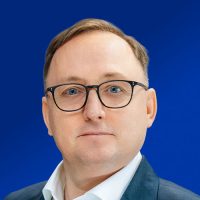
Mārtiņš Kazāks
Governor of Latvijas Banka
Read more
On 12 December 2019 the Saeima of the Republic of Latvia appointed Mārtiņš Kazāks Governor of Latvijas Banka for a term of five years. On February 6, 2025, the Saeima elected Mārtiņš Kazāks as the Governor of Latvijas Banka for a second five-year term.
Mārtiņš Kazāks holds a BSc in Economics from the University of Latvia (1995), a Diploma in Economics from the University of Cambridge (1996), an MSc in Economics(with Distinction; 1997) and a PhD in Economics (2005) from the University of London.
In 1994–1995, he was Leading Economist in the Department of Macrofiscal Analysis and Forecast of the Ministry of Finance of the Republic of Latvia and Research Assistant at the Riga Office of the International Research and Exchanges Board.
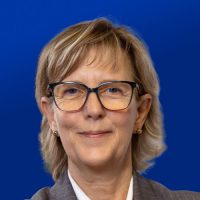
Maria Luís Albuquerque
EU Commissioner for Financial Services and the Savings and Investments Union
Read more
Maria Luís Albuquerque is currently the European Commissioner for Financial Services and the Savings and Investments Union. She is a highly experienced Portuguese economist and politician, best known for her role as Minister of Finance in Portugal from 2013 to 2015.
During her tenure, she played a critical role in managing the country’s financial crisis. Prior to her position as Minister of Finance, Maria Luís Albuquerque held various key positions in the public sector, including Head of Issuing and Markets at the Portuguese Treasury and Debt Management Agency.
After leaving politics, she continued her career in the private sector, contributing her expertise in finance and economic policy to international organisations and advisory roles. Her professional experience reflects a deep understanding of fiscal management, economic reform, and European financial systems.
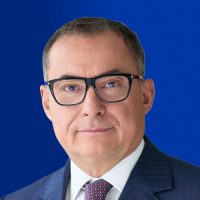
Joachim Nagel
President of the Deutsche Bundesbank
Read more
Joachim Nagel has been President of the Deutsche Bundesbank since January 2022. Prior to this, he had already served in management positions at the Bundesbank between 1999 and 2016, including as a member of the Executive Board from 2010 responsible for the Directorates General Markets, Controlling, and IT.
From 2016 to 2020, he worked for the KfW Group, including as a member of the Executive Board. In 2020, he joined the Bank for International Settlements (BIS) where he became Deputy Head of the Banking Department.
Joachim Nagel studied economics at the University of Karlsruhe where he received a PhD in 1997. He has been an honorary professor at the Baden-Wuerttemberg Cooperative State University (DHBW) since 2017. He also serves as a member of the Governing Council of the ECB, a Governor at the IMF, and a member of the BIS Board of Directors.
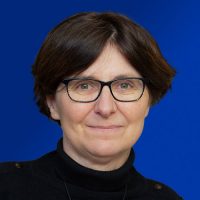
Agnès Bénassy-Quéré
Deputy Governor of the Banque de France and member of the Bruegel board
Read more
Agnès Bénassy-Quéré is Deputy-Governor at Banque de France, on leave from University of Paris 1 Panthéon-Sorbonne and Paris School of Economics where she is a Professor of economics. Prior to joining the Banque de France, she was Chief economist at the French Treasury (2020-2023).
From 2012 until 2017, she chaired the French Council of Economic Analysis. Prior positions include Director of CEPII, the French research institute in international economics (2006-2012), and academic positions at the Universities of Paris-Nanterre, Lille and Cergy-Pontoise, as well as at École Polytechnique. She was also a Member of the French macro-prudential authority, the tax advisory council, the productivity council, the Franco-German council of economic experts, and the Banque of France general board.
She was in charge of the CEPR European Economic Architecture Research and Policy Network, and was a non-resident fellow at Bruegel. Her research interests focus on the international monetary system and European macroeconomic policy.

Joe Heneghan
Revolut Holdings Europe CEO
Read more
Joe Heneghan is CEO of Revolut Holdings Europe, the entity holding Revolut’s European banks, investment firm, and insurance intermediary.
He has led the European business on a seven year journey from 7 million to 60 million customers and growing. Through Revolut’s mission to change how the world does money, as part of Europe’s standout fintech success story, he is changing how consumers and businesses engage with their money.
With over 30 years of leadership experience across banking and fintech, he previously held senior executive roles at Ulster Bank and Permanent TSB, progressing through a variety of marketing, product management, and digital banking roles early in his career.
He now plays a central role in shaping the future of financial services in Ireland and Europe. Joe serves on the European Central Bank’s Euro Retail Payments Board, and Ireland’s Department of Finance’s Ireland for Finance Joint Committee. He is also a former Chair and current board member of Financial Services Ireland, representing the broader financial services sector.
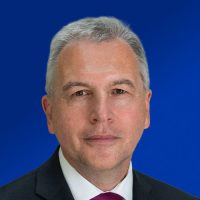
Alfred Kammer
Director of the European Department at the International Monetary Fund
Read more
Alfred Kammer was the Director of the European Department at the International Monetary Fund from August 2020 to July 2026. In this capacity, he oversaw the IMF’s work with Europe.
Mr. Kammer was previously the Chief of Staff of the Office of the Managing Director, advising the Managing Director on strategic and operational issues and overseeing operations for the senior management team; Deputy Director of the Strategy, Policy and Review Department, overseeing the work on Fund strategy and surveillance policy; Deputy Director of the Middle East and Central Asia Department, overseeing regional economic developments and financial sector issues; Director of the Office of Technical Assistance Management, advising management on technical assistance operations and overseeing fundraising and global partnerships for capacity building; and Advisor to the Deputy Managing Director.
Mr. Kammer also served as resident representative of the IMF in Russia. Since joining the IMF, Mr. Kammer worked with countries in Africa, Asia, Europe, and the Middle East, and on a wide range of policy and strategic issues.
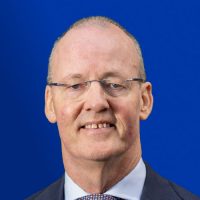
Klaas Knot
Member of the Systemic Risk Council CFA Institute, Distinguished Visiting Fellow Peterson Institute for International Economics
Read more
Klaas Knot was President of De Nederlandsche Bank from 1 July 2011 to 1 July 2025, a period during which he was also a member of the Governing Council and General Council of the European Central Bank, the European Systemic Risk Board, the International Monetary Fund’s Board of Governors, and the Board of Directors of the Bank for International Settlements. He served as Chair of the G20’s Financial Stability Board from 2 December 2021 to 1 July 2025.
Klaas Knot currently runs his own strategic consultancy firm, KK Economic Advisory, where he advises European and Dutch public authorities on wide-ranging issues such as crisis management, central bank independence, and financing public infrastructure. He is also a frequent speaker at various (inter)national conferences and symposia.
Klaas Knot recently joined the Peterson Institute for International Economics as a Distinguished Visiting Fellow as well as the CFA Institute Systemic Risk Council. Since 2019, he has been an active member of the Group of Thirty, a global advisory body comprised of economic and financial leaders. He has been an honorary professor of Money and Banking at the University of Groningen since 2005, and an honorary professor of Monetary Stability at the University of Amsterdam since 2015.
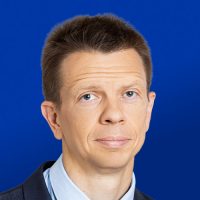
Andris Strazds
Deputy Governor of Latvijas Banka
Read more
Andris Strazds has been with Latvijas Banka since February 2014. As of 31 July 2023 he is the Head of General Secretariat. Before that he was Adviser to the Council of Latvijas Banka, Adviser to the International Relations and Communication Department and Adviser to the General Secretariat. Before his work at Latvijas Banka he was the chief economist at Nordea Bank Finland Plc. Latvia branch, transactions manager at PriceWaterhouseCoopers Ltd. and strategy development manager at Lattelekom Ltd.
Mr. Strazds holds his M.Sc. degree in International Economics and Business from the Stockholm School of Economics (Sweden).

Kārlis Vilerts
Head of the Research Division at Latvijas Banka
Read more
Kārlis Vilerts holds a PhD in Economics from the University of Latvia. Before he was awarded a summa cum laude Master’s degree in Economics, with mathematic economics as his specialty, and a Professional Bachelor’s degree in Financial Management. He has continued his professional development attending seminars and courses in Austria, Germany, Spain and USA.
Vilerts has been with Latvijas Banka since 2015 when he began working at the Department of Macroeconomic Analysis as an Economist, later Advisor. His previous work experience was related to the corporate financial analysis. Since 2017 he supervises theses in the Stockholm School of Economics in Riga
Kārlis is author of numerous publications. His topics of interest are monetary policy, fiscal policy and labour market outcomes. He has participated in various international scientific conferences and represents Latvijas Banka in European System of Central Banks working groups.
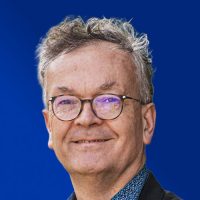
Jeromin Zettelmeyer
Director of Bruegel
Read more
Jeromin Zettelmeyer has been the Director of Bruegel, the Brussels-based economic policy think tank, since September 2022.
He previously served as Deputy Director of the Strategy and Policy Review Department of the International Monetary Fund (IMF), Senior Fellow at the Peterson Institute for International Economics (2016–2019), Director-General for Economic Policy at the German Federal Ministry for Economic Affairs and Energy (2014–2016), Director of Research and Deputy Chief Economist at the European Bank for Reconstruction and Development (2008–2014), and IMF staff member (1994–2008).
Jeromin Zettelmeyer’s recent work has focused on geopolitical change and reform in the EU, the EU fiscal framework, public debt sustainability, economic security, and international climate finance. Aside from leading Bruegel, Jeromin Zettelmeyer is a Research Fellow of the Centre for Economic Policy Research (CEPR), and a member of the Euro50. He holds an economics degree from the University of Bonn (1990) and a PhD in economics from MIT (1995).
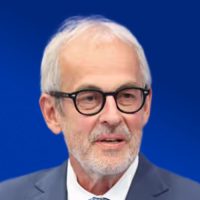
Roberts Zīle
Vice President of the European Parliament
Read more
Mr Roberts Zīle is a prominent Latvian politician, on a national and international level. He studied in the University of Latvia, earning a doctorate in economics. He first entered the political stage in the 1990s, becoming a member of the Latvian Citizen’s Congress. In 1995, he served, as a member of the 5th Saeima and in 1997 Zīle became the Minister of Finance of Latvia. Zīle also held the post of Minister of Transport from 2002 until 2004.
Since 2004, Zīle has been a Member of the European Parliament. Zīle is a member of the ‘European Conservatives and Reformists’ (ECR) political group. He is the leader of the Latvian delegation and a member of the ECR Bureau. Zīle is an active Member in the Transport and Tourism Committee, as well as the Committee of Economic and Monetary Affairs.
In 2021 Mr Zīle was elected as a Vice President of the European Parliament. He is the first Latvian MEP to hold this post, and the first Baltic MEP to represent the Baltic countries in EP Bureau.
Conference venue
National Library of Latvia Mūkusalas iela 3, Rīga
Parking
Parking is available at the National Library of Latvia (LNB) car park at Mūkusalas iela 5, as well as in designated parking spaces between the Stone Bridge and the Railway Bridge and on nearby streets:
📍 Valguma iela
📍 Klīveru iela
📍 Hugo Celmiņa iela
📍 Akmeņu iela
📍 Mūkusalas iela
Parking fee
The parking fee at the LNB car park at Mūkusalas iela 5 is EUR 2.00 per hour.
Payment
Parking can be paid for:
💳 by payment card
📱 via the Mobilly app
Public transport
The National Library of Latvia is also easily accessible by public transport. The “Nacionālā bibliotēka” stop is located directly opposite the library.
🚋 Trams: 2, 5, and 10
🚌 Buses: 3, 22, 32, 35, 43, and 54
🚎 Trolleybuses: 9 and 27

Latvijas Banka newsletters
Interested in receiving news and updates from Latvijas Banka? Subscribe to our newsletters.
Economic conference 2026
From Policy to Impact
Europe's Economic Future